
How to Set Career Goals and Stay Motivated
Setting strong career goals is the foundation of long-term professional success. Whether you’re just starting, advancing in your field, or pivoting into a new industry, your goals serve as a roadmap that guides your decisions and actions. However, many people struggle with staying committed and motivated after setting their goals.
This guide breaks down the process into simple, practical steps that can help you stay focused and consistent.
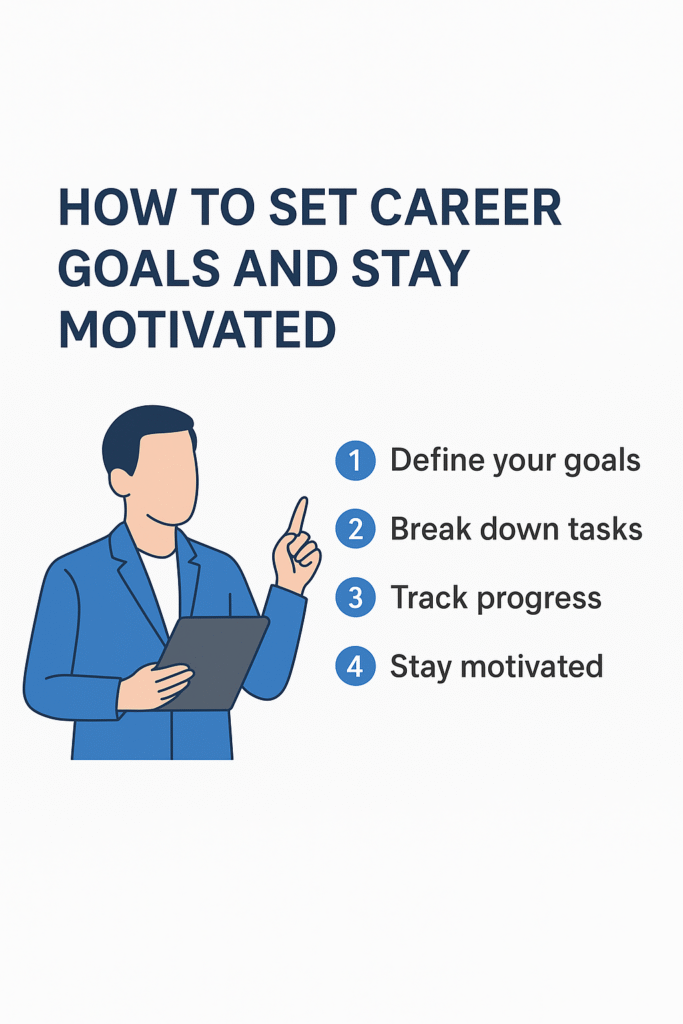
1. Understand the Importance of Career Goals
Career goals give your professional journey direction. Without goals, it becomes easy to feel stuck, confused, or overwhelmed by opportunities and challenges. Clear career goals enable you to measure your progress and make decisions that truly align with your long-term aspirations.
Career goals help you:
- Stay organized
- Manage your time better
- Focus on what matters
- Track growth and improvement
- Remain accountable
2. Use the SMART Framework
One of the best ways to set clear and realistic goals is by using the SMART method. SMART stands for:
- Specific: State exactly what you want to achieve.
- Measurable: Add numbers or metrics so you can track progress.
- Achievable: Make sure the goal is realistic and within reach.
- Relevant: Ensure the goal aligns with your bigger career vision.
- Time-bound: Set a timeline or deadline.
Example of a SMART goal:
“Complete a professional certification in digital marketing within 6 months to qualify for entry-level roles.”
This is clear, practical, and measurable.
3. Break Big Goals into Smaller Tasks
Large goals can feel intimidating and may reduce your motivation over time. Breaking them into smaller steps makes the process easier and more achievable.
Example:
If your goal is to become a project manager, smaller steps might include:
- Completing an online certification
- Learning project management software
- Gaining leadership experience
- Applying for assistant roles
These small steps build confidence and keep you moving forward.
4. Create a Career Roadmap
A career roadmap is a visual or written plan that shows where you are now and where you want to be in the future. It includes the skills, experiences, and actions required along the way.
Your roadmap should have:
- Short-term goals (0–12 months)
- Medium-term goals (1–3 years)
- Long-term goals (3–10 years)
A roadmap makes it easier to stay focused and track your progress over time.
5. Build the Right Skills
Every career path requires specific skills, whether they are technical, soft, or industry-specific. Once your goals are clear, identify the skills you need to acquire or improve.
These may include:
- Leadership
- Communication
- Data analysis
- Customer service
- Digital literacy
- Problem-solving
Online courses, workshops, certifications, books, and mentorships are great ways to develop your skills.
6. Surround Yourself With Support
Your environment plays a major role in your success. Surround yourself with people who encourage your growth and push you to do better.
These people may include:
- Mentors
- Colleagues
- Friends
- Career coaches
- Professional networks
Positive support helps you stay motivated even when challenges arise.
7. Track Your Progress Regularly
Monitoring your progress helps you understand what’s working and what needs adjustment. It also boosts motivation because you can see your growth over time.
Ways to track your progress:
- Use a journal
- Create a digital tracker
- Set monthly check-ins
- Review milestones every quarter
Adjust your plan if needed; flexibility is key to sustainable growth.
8. Stay Consistent and Avoid Burnout
Consistency is more important than perfection. Working on your goals daily or weekly keeps your momentum alive. However, overworking yourself can lead to burnout and frustration.
To stay motivated:
- Rest when needed
- Celebrate small wins
- Take breaks
- Maintain a healthy balance
Remember: career growth is a marathon, not a sprint.
9. Visualise Your Success
Visualisation is a powerful tool used by top achievers. Picture yourself achieving your goals, receiving a promotion, starting a business, or landing your dream job. This mental picture helps strengthen your motivation and determination.
10. Review and Update Your Goals
Career goals are not fixed. As you grow, your priorities may change. Review your goals at least once a year to ensure they still align with your vision.
If your interests, environment, or opportunities shift, updating your goals ensures you stay on the right path.
Final Thoughts
Setting career goals is the first step toward building the professional life you want. Staying motivated is the second step and this is where many people struggle. By breaking your goals into manageable steps, tracking your progress, and staying consistent, you create a clear and realistic path toward long-term career success.
Remember: your career is your journey. Take control of it with purpose and clarity, and the results will follow.