
Building a Strong Personal Brand for Career Success
In today’s competitive job market, your personal brand is more than just a buzzword, it’s a powerful career asset. Whether you’re a student, job seeker, freelancer, or professional hoping to climb the corporate ladder, a strong personal brand positions you as someone worth paying attention to. More importantly, it helps employers and industry peers understand who you are, what you do, and why you stand out.
This guide breaks down the essential steps to building a personal brand that supports long-term career growth.
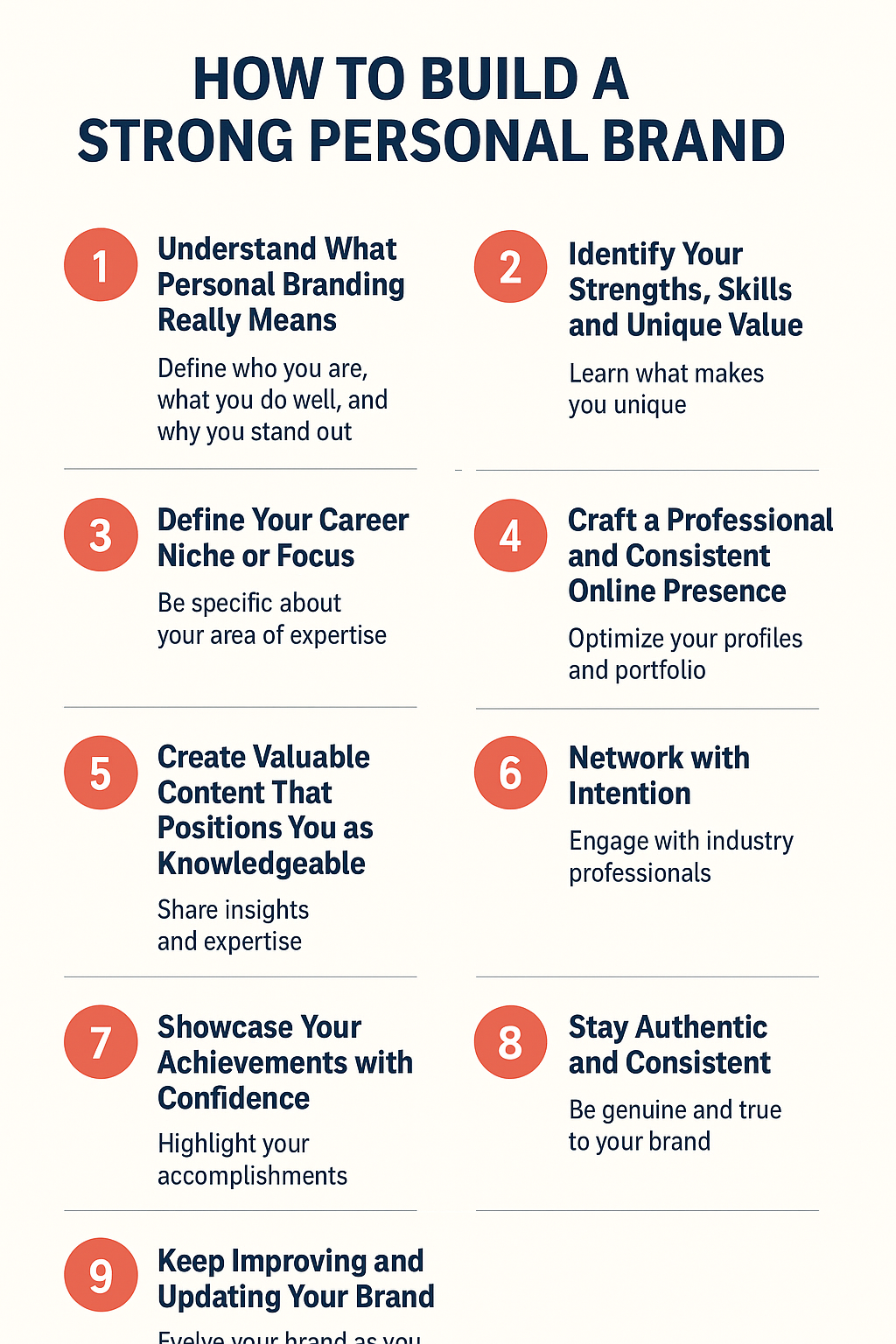
1. Understand What Personal Branding Really Means
Personal branding is not about pretending to be someone you’re not. Instead, it is the intentional process of communicating your strengths, values, skills, personality, and professional identity.
A great personal brand answers three key questions:
- Who are you?
- What do you do well?
- Why should people choose you?
When you can confidently articulate these, you begin to separate yourself from the crowd in a memorable way.
2. Identify Your Strengths, Skills, and Unique Value
Your personal brand starts from within. Take time to discover what makes you unique. Ask yourself:
- What tasks come naturally to me?
- What do colleagues, friends, or mentors often praise me for?
- What impact have I made in past roles or projects?
This clarity becomes the foundation of your brand message. Your strengths should appear in your CV, online profiles, content, and conversations.
3. Define Your Career Niche or Focus
A strong personal brand is specific, not vague. Employers are drawn to professionals who know their direction.
Examples of niche clarity:
- Instead of “I work in tech,” say “I build user-friendly mobile apps for fintech companies.”
- Instead of “I’m a writer,” say “I create SEO-optimized career and personal development content.”
When your niche is clear, opportunities align with you naturally.
4. Craft a Professional and Consistent Online Presence
Your online presence is often the first impression employers and recruiters get. Ensure your digital footprint is polished, updated, and aligned with your career goals.
Key platforms to optimize:
- Use a professional profile photo
- Write a clear headline
- Add achievements, skills, and recommendations
Portfolio Website (optional):
- Showcase your work
- Highlight testimonials
- Include a bio, contact info, and achievements
Social Media:
Maintain professionalism, even on casual platforms. A consistent tone across platforms boosts trust.
5. Create Valuable Content That Positions You as Knowledgeable
Content creation helps you demonstrate what you know, not just what you claim to know. This is a powerful way to grow your personal brand and attract opportunities.
Types of content to share:
- Educational LinkedIn posts
- Industry insights
- Short videos
- Portfolio projects
- Blog posts
- Case studies
Sharing content consistently helps you appear as a voice worth listening to in your field.
6. Network with Intention
Personal branding isn’t only about visibility; it’s about relationships. Engage with people who inspire or challenge you. Comment on industry posts, join professional groups, attend webinars, or participate in online communities.
Effective networking involves:
- Asking thoughtful questions
- Sharing useful insights
- Offering help when possible
- Maintaining genuine connections
Networking expands your reach and strengthens how people perceive your brand.
7. Showcase Your Achievements with Confidence
You are your best advocate. Highlight your accomplishments using clear, measurable language.
Instead of saying:
“I helped improve customer service.”
Say:
“I improved customer satisfaction by 30% through quicker response times and personalized support.”
Specific achievements give your brand credibility.
8. Stay Authentic and Consistent
Authenticity is the backbone of a strong personal brand. Be genuine, clear, and true to who you are. Avoid exaggerating achievements or imitating others. The more authentic you are, the easier your brand becomes to maintain.
Consistency also matters, your tone, values, and message should align across every platform and interaction.
9. Keep Improving and Updating Your Brand
Personal branding is not a one-time project. Your skills, goals, and experiences will grow and your brand should grow with them.
Regularly update your:
- LinkedIn profile
- Portfolio
- CV
- Content topics
- Skills and certifications
A refreshed brand shows progress and dedication.
Final Thoughts
A strong personal brand is one of the most valuable career tools you can build. It helps you attract opportunities, stand out professionally, and position yourself with confidence. By understanding your unique strengths, staying consistent online, creating valuable content, and building meaningful connections, you create a brand that supports your long-term career growth.
Whether you’re just starting out or looking to elevate your career, investing in your personal brand is an investment in your future.