
How to Choose the Right Career Path
How to Choose the right career path is one of the most important decisions you will make. Whether you’re a student preparing for the future, a recent graduate entering the workforce, or a professional considering a career change, the process can feel overwhelming.
Thankfully, with the right guidance and a clear structure, you can choose a path that aligns with your strengths, interests, and long-term goals.
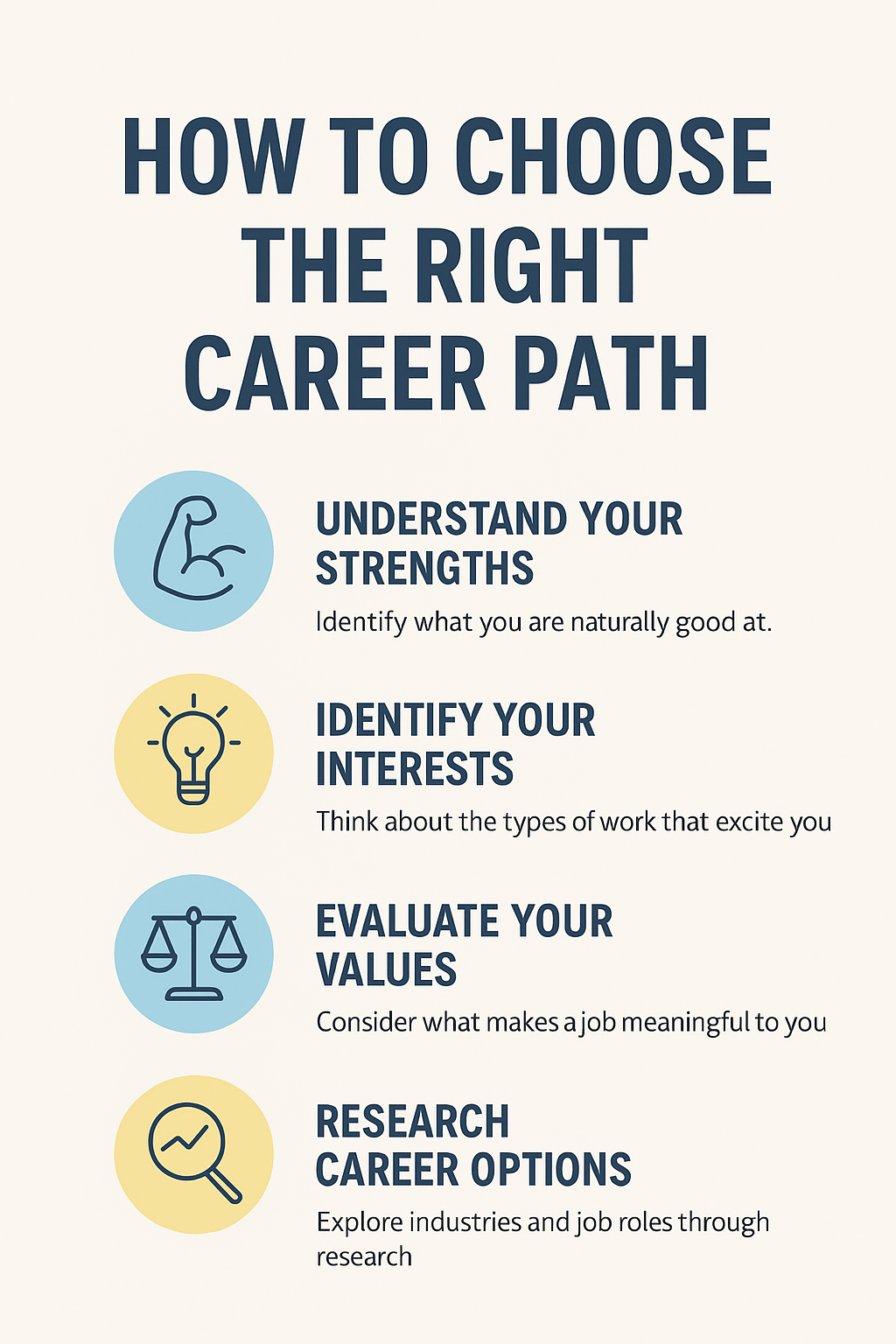
1. Understand Your Strengths
Before choosing a career, you need to understand what you are naturally good at. Your strengths reveal roles where you can thrive with less stress and more confidence.
Ask yourself:
- What tasks come naturally to me?
- What do people often praise me for?
- What skills do I perform well without much effort?
You can use free tools such as personality tests, strengths assessments, and career quizzes to help you identify your abilities.
2. Identify Your Interests
Your interests determine the type of work that excites you. When you enjoy what you do, your motivation levels increase, and you grow faster in your career.
Think about:
- What subjects or activities you enjoy
- What tasks make you lose track of time
- What type of work you would do even without being paid
A career that aligns with your interests is more fulfilling and sustainable.
3. Evaluate Your Values
Your values influence what makes a job meaningful to you. Some people value work-life balance, while others value growth, salary, creativity, or stability.
Ask yourself:
- Do I value flexibility or a structured environment?
- Do I prefer teamwork or independent work?
- Do I want stability or high-risk, high-reward opportunities?
When your career aligns with your values, job satisfaction tends to increase.
4. Research Career Options
Once you understand your strengths, interests, and values, research possible career paths, and use reputable sources like job boards, career sites, and professional publications.
Look at:
- Daily responsibilities
- Required skills and education
- Work environment
- Salary range
- Growth opportunities
This helps you compare different roles and choose the best fit.
5. Gain Real-World Experience
Experience is the best teacher. Before committing to a career, try to gain firsthand knowledge.
You can explore through:
- Internships
- Volunteering
- Job shadowing
- Short training programs
- Freelance work
These experiences help you understand what the job is really like.
6. Seek Professional Guidance
Career counselors, mentors, and industry experts can help you evaluate options and avoid costly mistakes. They provide clarity based on real-world experience and industry trends.
7. Set Clear Career Goals
After choosing your direction, create short-term and long-term goals. Career goals help you stay focused and measure your progress.
For example:
- Short-term goal: Complete a digital marketing course.
- Long-term goal: Become a marketing manager in 5 years.
Final Thoughts
Choosing a career path doesn’t happen overnight. It requires self-reflection, research, and guidance. The good news is that careers are flexible. Your path can evolve as you grow. Focus on what aligns with who you are, stay open to learning, and make decisions with confidence.